
Kado Bar Vape: How to Recognize an Old or Damaged Device
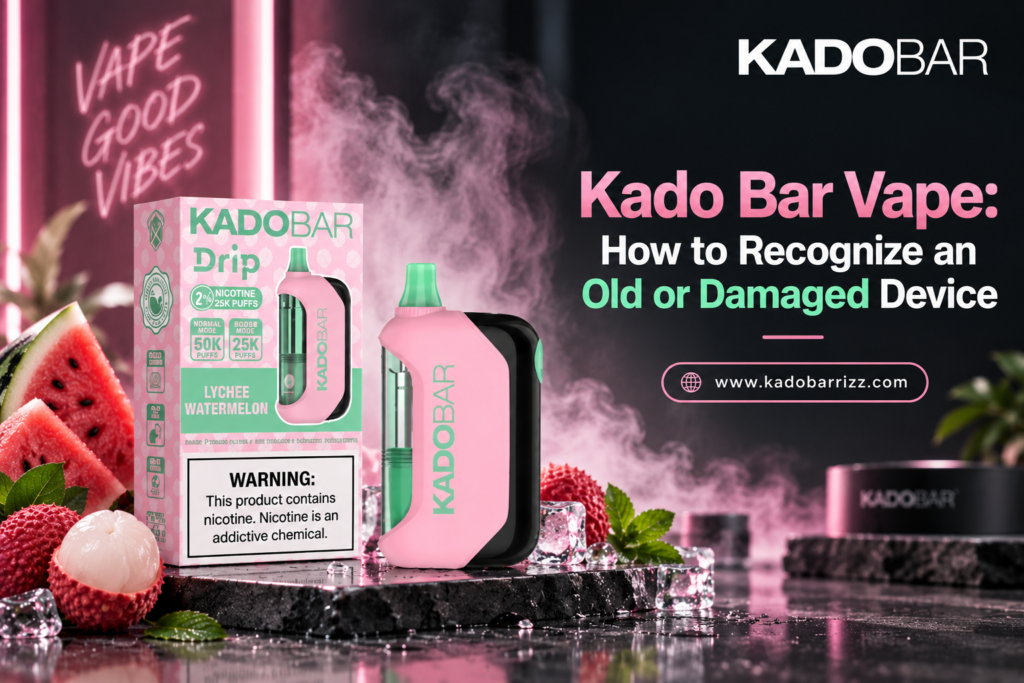
A Kado Bar vape can look fine on the outside while still showing signs that it is old, worn out, or damaged. Knowing what to look for is important, especially when a device has been stored for a long time, dropped, exposed to moisture, or left unused.
Not every change means a Kado Bar is unsafe or defective. Some signs simply indicate that the device has reached the end of its usable life. Others—such as leaking from the charging port, physical battery damage, or unusual heat—are reasons to stop using the device.
Kado Bar’s published guidance says that devices are intended to be used until the battery or e-liquid is depleted and then disposed of or recycled appropriately. It also recommends stopping use if liquid is leaking from the air holes or charging port.
How to Tell If a Kado Bar Is Old
There isn’t always an obvious date printed on a vape that tells you exactly how old it is. Instead, you may notice changes in the packaging, battery performance, liquid appearance, or overall device condition.
Some signs to look for include:
- Packaging that appears worn or damaged
- A device that has been stored for a long period
- Noticeably reduced battery performance
- Little or no vapor despite having charge
- Weak or unusual flavor
- E-liquid that appears very different from when the device was new
- A device that no longer activates consistently
An older device isn’t automatically damaged, but prolonged storage can affect battery performance and other components.
Signs Your Kado Bar May Be Damaged
Physical damage is generally easier to identify than age. Before using a device that has been dropped or stored improperly, inspect it carefully.
1. Cracks or Major Dents
Look closely at the body of the Kado Bar.
Minor cosmetic marks aren’t necessarily a functional problem, but deep cracks, significant dents, broken plastic, or a distorted body deserve more attention.
A damaged outer casing can indicate that internal components have also been affected.
If the device has been badly crushed or dropped, don’t continue using it simply because it still produces vapor.
2. Leaking From the Airflow or Charging Port
A small amount of condensation around the mouthpiece can occur during normal use. Kado Bar’s FAQ distinguishes this from liquid leaking through the air holes or charging port and advises users to stop using the device if that happens.
Check for:
- Liquid around the airflow openings
- Liquid entering or coming from the charging port
- Persistent wetness around the bottom of the device
- E-liquid collecting inside packaging or pockets
If you notice significant leakage, don’t attempt to repair or refill the device.
3. The Device Gets Unusually Hot
Some warmth can occur during normal use or charging, but unusual or rapidly increasing heat is a warning sign.
Stop using the Kado Bar if it becomes excessively hot, particularly if the heat is accompanied by:
- A strange smell
- Swelling
- Hissing or unusual sounds
- Visible damage
- Battery or charging problems
Don’t place a suspiciously hot device back on a charger to see if the problem goes away.
4. A Swollen or Distorted Body
A noticeable bulge or change in the shape of the device should not be ignored.
Because Kado Bar devices contain lithium-ion batteries in rechargeable models, physical changes to the battery area can be a serious warning sign.
Do not squeeze, puncture, open, or attempt to straighten a swollen device.
Move away from using or charging it and follow appropriate battery/electronic-device disposal guidance.
5. The Kado Bar Doesn’t Charge Normally
Rechargeable Kado Bar models can show charging or battery indicators depending on the device.
If a device that previously charged normally suddenly:
- Doesn’t recognize the charger
- Repeatedly stops charging
- Becomes unusually hot while charging
- Shows inconsistent charging behavior
- Has a visibly damaged charging port
don’t keep reconnecting it repeatedly.
Kado Bar’s guidance recommends unplugging the device once it indicates that charging is complete and avoiding leaving electronic devices charging unattended for extended periods.
6. The Device Blinks Repeatedly
Blinking doesn’t automatically mean that a Kado Bar is damaged.
According to Kado Bar’s FAQ, a blinking light commonly indicates that the battery needs charging. If the device continues blinking after a full charge, it may have reached its maximum puff count.
So before treating blinking as a hardware failure, check:
- Battery level
- E-liquid level
- Whether the device has been heavily used
- Whether the specific model has reached its usable limit
If the device continues behaving abnormally after basic checks, stop using it rather than repeatedly trying to activate it.
7. Very Weak or No Vapor
A Kado Bar that produces little or no vapor isn’t necessarily old or damaged.
It could simply have:
- An empty e-liquid reservoir
- A depleted battery
- Restricted airflow
- A problem with the heating system
- Reached the end of its usable life
Kado Bar’s product guidance notes that vapor production can decrease as e-liquid runs low and that the device should be replaced when the liquid is fully used.
If the device is old and you’re experiencing several of these symptoms at the same time, replacement may be more appropriate than troubleshooting.
8. Burnt or Unusual Taste
Flavor changes can also tell you something about the condition of the device.
A burnt taste can occur when the e-liquid is depleted or the heating system is no longer performing normally. If a brand-new device tastes burnt immediately, it may indicate a defective product; if the taste develops after extensive use, the device may simply be nearing the end of its usable life.
Don’t continue taking repeated puffs from a device that consistently produces a burnt taste.
9. Damaged Mouthpiece
The mouthpiece is one of the easiest parts of a Kado Bar to inspect.
Look for:
- Cracks
- Loose plastic
- Deformation
- Blockages
- Excessive liquid around the opening
A small amount of condensation can happen during normal use, but a damaged or loose mouthpiece can affect the airflow and overall condition of the device.
10. Signs of Water or Moisture Damage
Vapes aren’t designed to be submerged or exposed to significant amounts of water.
If your Kado Bar has been dropped into water, exposed to heavy moisture, or has liquid around the charging area, don’t assume it is safe just because it still turns on.
Water exposure can affect electronic components and the battery.
Don’t charge a device that has been exposed to significant moisture.
How to Check a Kado Bar Before Using It
If you’ve found an older Kado Bar that has been sitting unused, take a few moments to inspect it.
Step 1: Check the Packaging
Look for damaged seals, crushed packaging, unusual printing, or signs that the package has been opened.
Step 2: Inspect the Device
Look for cracks, dents, swelling, loose components, or other physical damage.
Step 3: Check the Mouthpiece
Make sure there is no obvious blockage or excessive liquid.
Step 4: Inspect the Charging Port
If your model is rechargeable, check that the port isn’t visibly damaged or wet.
Step 5: Check the Battery and Liquid Indicators
If your particular Kado Bar has a screen or indicator, check the battery and e-liquid status.
Step 6: Verify Authenticity
If you’re unsure whether the device is genuine, check the authentication information provided with the packaging. Kado Bar’s published FAQ recommends using the authentication code on the packaging to verify a product.
How to Recognize a Potentially Fake Kado Bar
Age isn’t the only reason a Kado Bar might perform differently. A counterfeit product can also have unusual build quality or performance.
Pay attention to:
- Poor-quality printing
- Misspelled words
- Packaging that looks different from expected product packaging
- Suspiciously low pricing
- Missing or questionable authentication information
- Poor construction
- An unusual charging port or airflow design
Kado Bar’s published guidance recommends purchasing through authorized sellers and using the authentication code to check whether a product is genuine.
Don’t assume a device is authentic simply because the box looks similar to one you’ve seen online.
Can You Still Use an Old Kado Bar?
It depends on its condition.
An older device that has simply been stored for a while and shows no signs of damage, leaking, swelling, overheating, or other abnormal behavior is different from a device that has been physically damaged.
However, age alone doesn’t tell you whether a battery is in good condition. If you’re uncertain about a device’s history or it has been stored improperly, replacing it is preferable to taking unnecessary risks.
When Should You Stop Using a Kado Bar?
Stop using the device if you notice:
- Significant leaking
- Swelling
- Cracks around the body
- Severe physical damage
- Excessive heat
- Burning or unusual odors
- A damaged charging port
- Signs of water damage
- Abnormal sounds
- Repeated malfunction after basic troubleshooting
Don’t open the device to investigate the battery or internal components.
Kado Bar’s own guidance specifically says to stop using a device if liquid is leaking from the air holes or charging port.
What Should You Do With a Damaged Kado Bar?
Don’t throw a damaged rechargeable vape into ordinary household trash or attempt to dismantle it.
Because these devices can contain lithium-ion batteries and electronic components, follow local guidance for battery or electronic-waste disposal. Keep a damaged device away from heat and avoid puncturing or crushing it.
If the product was recently purchased and arrived damaged, contact the retailer rather than attempting to repair it yourself. Some Kado Bar retailers have specific procedures for defective or damaged products, and documentation such as photos, videos, and order information may be requested.
Final Thoughts
Recognizing an old or damaged Kado Bar starts with a simple inspection. Reduced vapor, declining battery life, and an empty e-liquid reservoir can simply mean the device has reached the end of its normal lifespan. Cracks, swelling, significant leaking, excessive heat, water exposure, or charging abnormalities are more serious warning signs.
If you’re uncertain about a device, don’t open it or try to repair the battery. A replacement or support from the retailer is a better option than continuing to use a potentially damaged device.
Nicotine is addictive. Nicotine-containing vape products are intended only for adults who are legally permitted to purchase them, and people who do not currently use nicotine should not start.
FAQs
How can I tell if my Kado Bar is too old?
There may not be a simple date-based test. Look for reduced battery performance, weak vapor, changes in flavor, packaging deterioration, or other signs that the device has been stored for a long time.
Is a leaking Kado Bar safe to use?
If liquid is leaking from the air holes or charging port, stop using the device. Kado Bar’s published FAQ specifically recommends discontinuing use in this situation.
Why is my old Kado Bar not producing vapor?
The battery may be depleted, the e-liquid may be empty, the airflow may be restricted, or the device may have reached the end of its usable life.
Can I use a Kado Bar that has a small scratch?
A minor cosmetic scratch doesn’t necessarily mean the device is damaged. However, inspect it carefully for deeper cracks, dents, swelling, or other changes before using it.
What if my Kado Bar is swollen?
Do not use, charge, puncture, squeeze, or open a swollen device. Follow appropriate local guidance for handling and disposal of damaged lithium-battery electronics.
Why does my Kado Bar get hot?
Some warmth can occur during normal operation or charging, but unusually high or rapidly increasing heat is a reason to stop using the device and disconnect it from charging if it is safe to do so.
Can I repair a damaged Kado Bar myself?
It’s best not to. Kado Bar devices contain electronic and battery components that shouldn’t be opened or modified by the user. Contact the retailer or manufacturer if you believe the device is defective.
How do I check whether my Kado Bar is authentic?
Check the authentication information supplied with the product packaging. Kado Bar’s published FAQ recommends using the product’s authentication code to verify authenticity.